This post contains affiliate links, which means I may earn a small commission if you shop through them, at no extra cost to you. As an Amazon Associate, I earn from qualifying purchases. See my full affiliate disclosure.
You can build vocabulary through books without ever turning reading time into a lesson. Some of the words my kids use now are words I never sat down and taught them. They heard them in stories.
A good book introduces words kids might not hear in everyday conversation. Because those words are attached to a funny character or a story they love, they stick. I actually think it works better when you don’t turn it into a lesson. Here are three books that showed me this with my own kids.
Table of Contents
Mercy Watson: Vocabulary Learning Without a Vocabulary Lesson
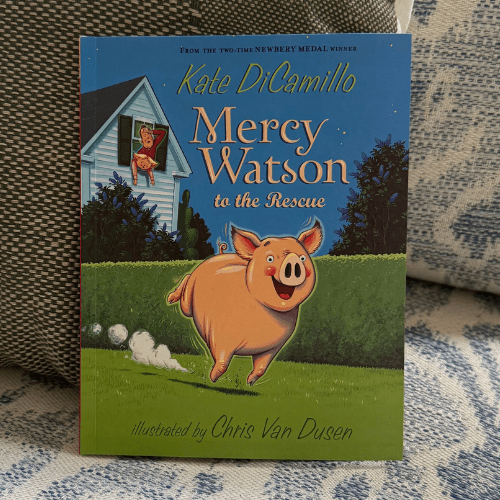
My kids are especially attached to the Mercy Watson books by Kate DiCamillo, illustrated by Chris Van Dusen. We started with Mercy Watson to the Rescue, and it quickly became one of those books where finishing the story led to one question: “Can we read the next one?” That’s a great outcome when you’re trying to get your children interested in chapter books.
The chapters are short, the story is ridiculous in the best possible way, and Mercy is a hilarious pig who turns ordinary situations into complete chaos. My kids wanted to keep going, which meant they kept hearing rich language along the way. We’ve read the whole Mercy Watson series (Mercy Watson Goes for a Ride, Mercy Watson Fights Crime, Mercy Watson Thinks Like a Pig, Mercy Watson: Princess in Disguise, and Mercy Watson: Something Wonky This Way Comes), and now we’ve moved on to the spin-off books about the other characters on Deckawoo Drive. We just finished Leroy Ninker Saddles Up, and the kids are just as hooked. Same humor, same short chapters, and plenty of new words.
My kids also pick up unusual words from these books and try them out. Mercy Watson Goes for a Ride introduces “folly” when Baby Lincoln says she’s looking for some “folly and adventure.” I wouldn’t think to sit down and teach a word like that, but the kids heard it in a story. That’s vocabulary learning without a vocabulary lesson. You’ll find more of our favorite words in the table below.
Why I Keep Recommending Mercy Watson
These books helped one of my children go from “I don’t like chapter books” to “Can we read the next one?” That’s a meaningful shift. The stories are short enough to feel manageable, the illustrations keep the pages engaging, and the humor gives kids a reason to find out what happens next.
If you want a fun way to build vocabulary through books, Mercy Watson is a great place to start. But that’s not why we started. We started because the books were fun, and the vocabulary was a bonus.
The Word Collector: A Book That Makes Words Feel Exciting
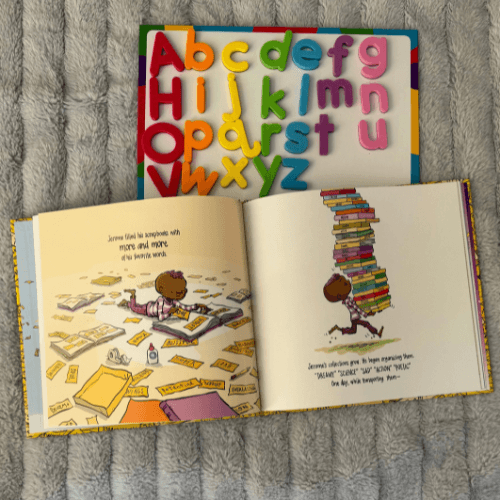
The Word Collector by Peter H. Reynolds is a natural way to build vocabulary through books. Its main character, Jerome, loves collecting words. The book presents words as something interesting to enjoy, not something a child has to memorize.
It also makes a great conversation starter. Maybe your child hears a word they don’t know, or one that sounds funny, or one they decide they love. You can stop and talk about it, or keep reading. There doesn’t have to be a quiz at the end.
Fancy Nancy: Learning Fancier Ways to Say Things
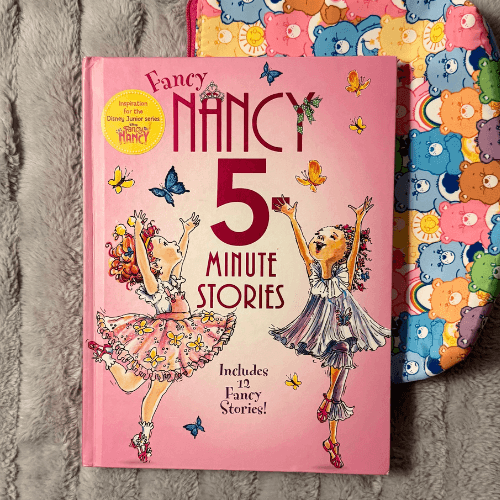
Nancy loves fancy words, and part of the fun is watching her swap an ordinary word for a more elaborate one. It shows kids there’s rarely just one way to say something. Nancy’s swaps are an easy way to build vocabulary through books, and you can try them at home:
- Beautiful → exquisite (or gorgeous or glamorous)
- Plain → understated
- Big disaster → fiasco
- Extra stuff → accessories
- Umbrella → parasol
Once kids start noticing fancy words, you may catch them trying them out in their own conversations. “Mom, that outfit is exquisite” is a pretty great thing to hear on a random Tuesday. And when they’re ready for a longer read, Nancy Clancy, Super Sleuth is the natural next step. It’s the chapter-book follow-up to Fancy Nancy, and my kids loved that one too.
3 Easy Ways to Build Vocabulary Through Books at Home
You Don’t Have to Explain Every Unfamiliar Word
I try not to stop and define every word my kids don’t know. Sometimes they figure it out from the story. Sometimes they ask. Sometimes they don’t notice at all, and all of that is okay. If they ask, I explain in a way that makes sense for them. If not, we keep reading. When the word shows up again in another story, that’s another chance to talk about it.
Try Using a New Word Later
This is the easiest tip because it needs nothing extra. If a book introduces an interesting word, look for a natural chance to use it later. If you read about something enormous, you might say, “Wow, that puddle is enormous!” If a character is exhausted, you might say, “I think we’re all exhausted after that day.” You aren’t testing your child. You’re giving them another chance to hear the word in a new situation, and sometimes they’ll surprise you by using it first.
And here’s my favorite part: when I use the word on purpose, my kids look at me, smile, and I can tell they know exactly what I’m doing. They’ve caught on that I’m using it deliberately, and that little moment of recognition is what makes the word stick. It turns into a shared joke instead of a lesson.
Let Your Kids Discover Words They Like
Some kids naturally notice unusual words, ask what things mean, and repeat the ones that sound funny. Even kids who aren’t natural “word collectors” can find words they enjoy when they’re surrounded by good stories. You don’t have to add another activity to your day to build vocabulary through books. Read interesting books, talk about interesting things, and give your kids plenty of chances to use new words when they’re ready. Sometimes the best vocabulary lesson is a book your child doesn’t want to put down.
Want to keep the word fun going? Browse more picks in our Kids Book hub.
Three Books I Love Reading With My Kids
Mercy Watson to the Rescue
A funny, approachable start to the series, and the book that got my kids asking for the next ones.
Shop: Amazon | Barnes & Noble | Target | Walmart
The Word Collector
Especially fun for kids who already love words, or for parents who want to encourage that curiosity.
Shop: Amazon | Barnes & Noble | Target | Walmart
Fancy Nancy: 5-Minute Fancy Nancy Stories
A playful way to notice specific, interesting words, with short stories that make reading easy to fit into the day.
Shop: Amazon | Barnes & Noble | Target | Walmart
These are books we actually enjoy in our house, which is always where I like to start.
More Books From This Post
Every book below is a fun way to build vocabulary through books. (Affiliate links included.)
| Book | Why we liked it | Shop |
|---|---|---|
| Mercy Watson Goes for a Ride | “Folly”: Baby Lincoln’s wild adventure. My kids used it before I knew where it came from. | Amazon |
| Mercy Watson Fights Crime | “Reform”: Leroy decides to change his ways. | Amazon |
| Mercy Watson Thinks Like a Pig | “Gracious”: Eugenia’s elegant, refined lifestyle. | Amazon |
| Mercy Watson: Princess in Disguise | “Peculiar”: a great swap for “weird.” | Amazon |
| Mercy Watson: Something Wonky This Way Comes | “Wonky” is in the title, and it started a conversation right away. | Amazon |
| Leroy Ninker Saddles Up (Mercy Watson spin-off, part of Tales from Deckawoo Drive) | “Procure”: Leroy is determined to procure a horse. | Amazon |
| Nancy Clancy, Super Sleuth (Chapter-book follow-up to Fancy Nancy) | “Motive”: one of Nancy’s fancy words, used while solving a mystery. | Amazon |
FAQ
How can I build my child’s vocabulary through books?
To build vocabulary through books, read stories they enjoy, let them hear new words in context, and reuse those words in everyday conversation. You don’t need to quiz or define every word.
Should I stop and explain every new word while reading?
No. Explain a word if your child asks, and otherwise keep reading. Kids often pick up meaning from context and from hearing the word again later.
What are good books for vocabulary in early readers?
Mercy Watson to the Rescue, The Word Collector, and Fancy Nancy are three fun starting points, and Nancy Clancy, Super Sleuth is a good next step for chapter-book readers.